Read My Lips: Why UK Telly Fans Are Reaching for the Subtitle Button
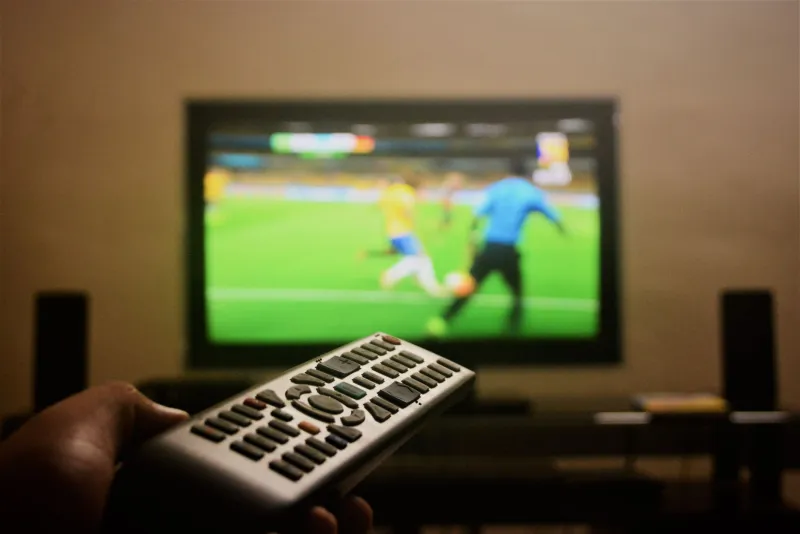
There was a time when turning on subtitles felt like a small admission of defeat. Maybe the kids were asleep, maybe the soundbar was doing its best, maybe the actor was doing that thing where every line is delivered into a coat collar. Either way, you pressed the button, the text appeared and you hoped nobody would notice.
In 2026, nobody is hiding it. Subtitles have become a normal part of watching telly in the UK, especially on streaming services. People switch them on for accents. They switch them on for whispered dialogue. They switch them on because they are watching on a tablet with a speaker the size of a digestive biscuit. They switch them on because they are also scrolling their phone, and reading the dialogue is the only way to keep up.
The subtitle button is no longer a niche accessibility tool. It is a mainstream viewing habit. And the reasons for that are more interesting than a simple story about noisy living rooms.
The sound mix problem
Modern television drama often sounds incredible in a cinema. In a living room, it can be a mess. Dialogue is frequently treated as one ingredient in a dense mix, rather than the thing the audience actually needs to follow. Music swells. Sound effects boom. Actors murmur. The result is a show that looks expensive and sounds like it is being performed behind a closed door.
This is not a new complaint. Ofcom has fielded audience frustration about unclear dialogue for years, and broadcasters have experimented with dialogue-boost settings and clearer mixes. But the problem has not gone away. If anything, the arms race between cinematic sound design and domestic speakers has made it worse. A drama mixed for a cinema screen does not necessarily translate to a terraced house in Leeds at 9pm with the dishwasher running.
Subtitles solve the problem instantly. They do not care about dynamic range. They do not care that the score is doing something moody. They just tell you what was said. For a lot of viewers, that is worth more than any amount of fiddling with the equaliser.
The accent defence
When people talk about subtitles in British telly, accents often come up. Sometimes that conversation is honest. Sometimes it is a polite way of saying something less polite. The truth is that regional accents are not the problem. Sound mixing is the problem. A Derry accent, a Shetland accent, a strong Yorkshire accent — none of these are inherently difficult. They become difficult when they are buried under music, delivered at speed or recorded in a way that prioritises atmosphere over clarity.
Subtitles can help with accents, but they can also flatten them. A good subtitle track preserves the rhythm and the slang. A bad one tidies everything into bland standard English. The best subtitles are the ones that trust the audience to keep up while giving them a fair chance.
Accessibility and the new default
It is important not to lose sight of the original purpose of subtitles. For deaf and hard-of-hearing viewers, they are not a lifestyle choice. They are essential. The same is true for people watching in noisy environments, people learning English and people who simply process written information more easily than spoken dialogue. The fact that subtitles are now fashionable should not obscure the fact that they are still an accessibility feature first.
What has changed is the stigma. In 2026, having subtitles on is not seen as a sign that you are not paying attention. It is often seen as a sign that you are paying more attention. The rise of second-screen viewing has helped. If you are half-watching while scrolling, subtitles keep you tethered to the plot. If you are watching a complex drama with a lot of names and places, subtitles act as a running glossary.
Streaming platforms have noticed. Subtitle menus are easier to find. Font sizes are more adjustable. Some services now remember your preference across devices. It is not perfect — subtitle quality still varies wildly — but the direction of travel is clear. The button is no longer hidden away in shame.
Shows that sent viewers scrambling
Some programmes are notorious for sending people reaching for the remote. These are not bad shows. They are shows where the audio demands a little help.
- Peaky Blinders: the Brummie accents, the clipped delivery and the constant clatter of pubs and factories make subtitles a sensible companion.
- Derry Girls: the Derry accent is part of the show's genius, but the rapid-fire jokes reward a subtitle track.
- Shetland: soft island accents, wind, waves and low-lit interiors are a tough combination for any living-room speaker.
- The Thick of It: overlapping dialogue, political jargon and furious swearing. Brilliant, but not always easy to follow at speed.
- Vigil: submarine sound design is supposed to be claustrophobic. It is also very good at swallowing dialogue.
- Line of Duty: acronyms, interviews and a lot of intense whispering. The subtitles are practically part of the investigation.
The subtitle as a tool, not a confession
The subtitle switch is not a failure of your ears or your telly. It is a practical response to the way modern television is made and the way modern audiences watch. We are not all sitting in silent, perfectly calibrated cinemas. We are watching on sofas, trains and phones, with distractions everywhere and a dozen different audio mixes competing for our attention.
So go ahead. Turn them on. Adjust the size. Pick the colour. The subtitle button is one of the few interface choices that genuinely puts the viewer in control. In a streaming landscape full of autoplay and algorithmic nudges, that is worth celebrating. And if anyone asks why you are reading your telly, tell them the truth: you are just making sure you do not miss the good line.