The Cleanup Crew: Why Britain's 4K Nostalgia Boom Is Quietly Editing the Past
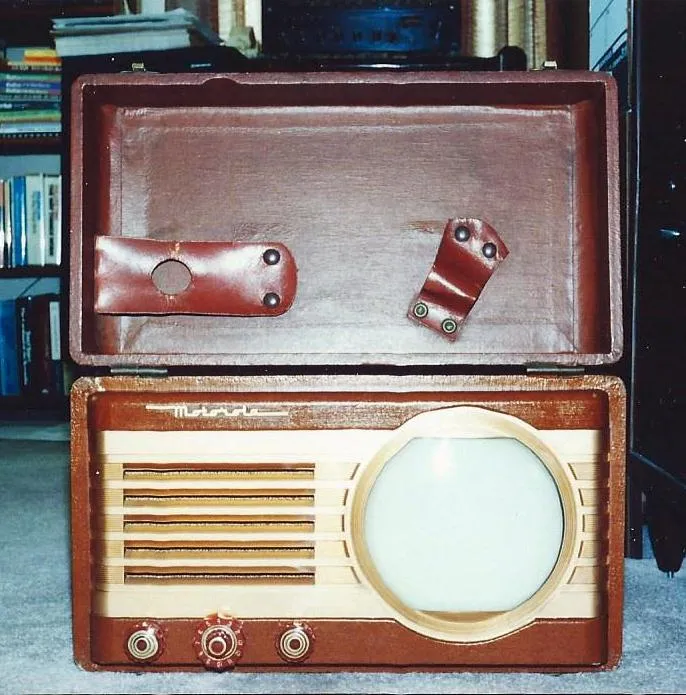
Photo: Joe Haupt from USA, CC BY-SA 2.0, via Wikimedia Commons
A 1970s sitcom arrives on a UK streamer in 4K HDR. The studio walls are crisp. The costumes have texture. The laughter is suspiciously clean. It looks wonderful — and slightly wrong. That is the strange bargain of Britain's current archive boom: we get to see old telly anew, but what we are seeing has been quietly tidied up for us. In 2026, the archive boom has become a genre of its own on UK streamers, and the sales pitch is always the same: the show you love, only sharper. The sharper bit is true. The 'only' bit deserves a closer look.
The grain is the evidence
Film grain is not dirt. It is the physical record of light hitting emulsion, and on archive telly it is a timestamp. Studio videotape has its own texture too — softer, smeary, electronic — the look of a 1970s BBC studio recorded to tape and then copied, and copied again. When a remaster runs noise reduction across that, it does not just remove 'imperfections'. It removes information. Faces go waxy. Fabrics go flat. The studio floor stops looking like a working set and starts looking like a showroom.
Fans have spent years arguing about this in forums and on social media. The HD versions of Only Fools and Horses have been picked over for missing detail; remastered Fawlty Towers has been through more than one pass; Dad's Army survives in a mix of studio tape and film recordings, and every release makes a different compromise. The pattern is familiar: the higher the resolution, the more tempting it is to 'fix' the look. But the look was the look. A 1970s sitcom is supposed to have a bit of mush. The mush is the room.
The aspect ratio amnesia
Then there is the frame. A lot of British telly was made in 4:3. On a modern widescreen telly, that means black bars — and black bars read as 'old' to a streamer's audience research. So the crop happens. The Sweeney and Minder have been through widescreen passes; soaps and dramas have been reframed for DVD and streaming. Sometimes it is done carefully. Often it is not. You lose the edges of the composition, the background business, the actor half out of frame who is about to deliver the punchline.
Cropping is not a neutral technical choice. It is a sales decision dressed as a cleanup. A 4:3 show in a 16:9 frame does not look modern; it looks like a 4:3 show with bits missing. The black bars are honest. The crop is a costume.
The sound of the studio
Audio gets the same treatment. Original mono recordings carry hiss, room tone and the specific echo of a studio audience in a specific building. Remix them into 5.1 and you can isolate the laughter, add reverb, scoop out the hiss. It sounds 'better' in a demo. It also sounds like a different room. Hiss is not a flaw; it is the acoustic fingerprint of the place where the thing was made. Scrub it and you are not restoring the past, you are upholstering it.
None of this is to say that every original version is perfect. Some tapes are damaged. Some masters are missing. Some shows only survive as film recordings or off-air copies. Restoration can rescue performances from oblivion. But rescue and rewrite are different jobs, and streamers have a habit of selling the second as the first.
Who gets to sign off?
Restoration is an editorial act. Someone chooses the colour grade, the noise reduction level, the aspect ratio, the audio mix. Someone decides whether the original title cards stay or get replaced with a shiny new logo. The 'remastered' badge on a tile is doing a lot of work: it implies a pure upgrade, when it is really a new edition. Doctor Who's missing episodes and animated reconstructions are an extreme example of how malleable archive telly can be, but the same logic applies to a sitcom's colour timing. The version you stream is not the version that aired. It is a version.
Soap archives make the stakes plain. Crossroads was famously wiped; early Coronation Street survives in patchy form. When the past is already incomplete, every restoration choice becomes a statement about what the archive should look like. If the only version on offer is the cleaned-up one, the historical record quietly narrows.
The thrill is real — so is the loss
It would be daft to pretend 4K restorations are only a threat. Seeing a favourite drama with that much clarity can be a genuine revelation: a performance you thought you knew, a set you never noticed, a costume that suddenly has a weave. Access matters. A generation that will not buy a boxset will press play on a streamer. If 4K gets them through the door, good.
But the market can hold two versions. Preservation-grade and presentation-grade. Original aspect ratio alongside the widescreen crop. The hissy mono track next to the surround remix. That is not purism; it is basic archive hygiene. The BFI and the archive sector have been saying this for years. The streamers have the tiles and the metadata to make it easy.
British telly history is not a fixed object. It is being reauthored in real time, one cleanup pass at a time. Keep the grain. Keep the 4:3. Keep the hiss. Otherwise the 4K time machine only travels one way: towards a past that looks suspiciously like now.