The Familiar Face Tax: What British Telly's Casting Shortlist Really Costs
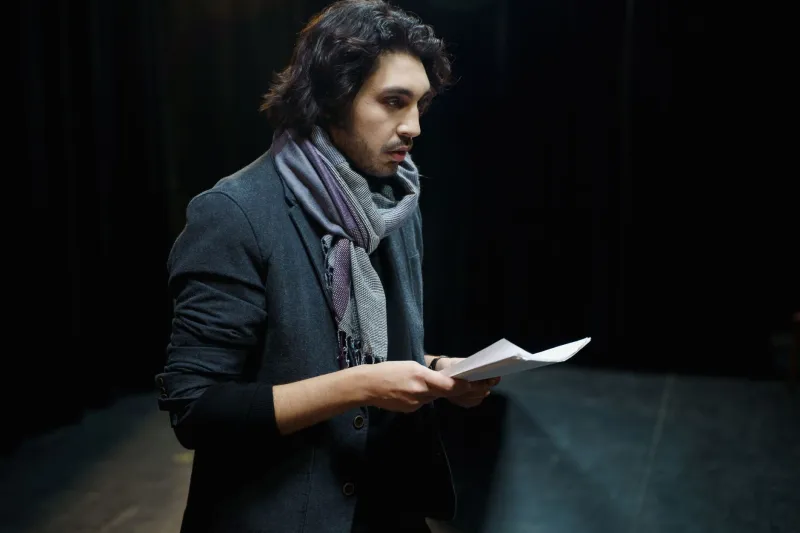
There is a moment, about ten minutes into almost any new British thriller, when you clock a familiar face and think: ah, right, they're in this. Then another turns up. Then a third. By the end of episode one you're half-expecting the whole thing to be revealed as a shared universe, and not entirely in a bad way. British telly has always been a repertory business. The same actors pop up in different coats, different postcodes, different procedural badges. But lately the rotation has tightened. The pool feels less like a national talent base and more like a very busy dinner party where the guest list hasn't changed in three years.
That isn't a dig at the actors. It's a structural story about how drama gets made in 2026, and who gets to be in the room when the money is agreed.
The Shortlist Is the Show
Casting has always been a de-risking exercise. A familiar name tells a commissioning editor that the show will feel expensive even if it isn't. It tells a co-producer that the project can travel. It tells the audience, in the space of a thumbnail, that this is a proper drama and not a punt. The problem is that the same logic now applies at almost every budget level. A cosy crime series set in a picturesque village needs a lead who can carry a returning franchise. A premium thriller needs a lead who can front an international marketing campaign. A mid-budget family drama needs a lead who can do both, on a schedule that allows for three months of shooting and a press tour.
That narrows the list fast. Add in availability, and it narrows again. Add in the fact that the same dozen people are being offered the same dozen roles in the same eighteen-month window, and you end up with a schedule that looks less like a casting search and more like a rota.
Risk, Pre-Sales and the Name on the Poster
There is a blunt economic truth here. British drama is rarely financed by one broadcaster anymore. It is a patchwork of licence fee, tax credit, distribution advances and co-production money. Each of those partners has an opinion about who should be on the poster, and those opinions tend to converge on the same handful of names. Not because those actors are the only ones who can do the job, but because they are the only ones who can be relied on to reassure everyone in the chain at once.
This is the familiar face tax. It isn't paid in cash, exactly. It's paid in repetition. A show gets made that might otherwise have stalled, but it gets made with a cast that feels pre-approved. The audience gets competence and continuity. The industry gets a slightly smaller pool of people with the kind of track record that makes financiers comfortable. The cost is paid by everyone else: the actor who has done three brilliant supporting turns but never quite broken into the lead bracket, the new graduate with a showreel and a weekend job, the regional performer whose accent is exactly right for the story but whose name doesn't travel.
The Co-Production Effect
Co-production has been brilliant for British telly in lots of ways. It has paid for ambitious series that would otherwise have been impossible. But it has also made casting more conservative. When a show is being sold into multiple territories, the question of who is in it becomes a question of who is recognisable in them. That doesn't always mean Hollywood names. Sometimes it means a British actor who has done well in Australia, or a face that has been in a Netflix hit, or someone who has a recurring role in a franchise that plays well in Scandinavia. The result is a shortlist that is international in ambition but oddly narrow in practice.
The mid-budget squeeze makes this worse. The ten-million-pound drama that could afford to take a chance on an unknown is harder to finance than the six-million-pound drama that needs a name to get over the line. So the risk gets pushed upwards, into the bigger shows, where the names are even more concentrated. It's a closed loop with good catering.
What It Costs New Talent
Casting directors will tell you the same thing: the talent is out there. The issue is the gap between being cast and being cast again. A first break is lovely, but a career needs a second and third. When the same faces are booked across multiple returning series, the entry-level roles get squeezed. The best friend, the junior detective, the daughter who comes home for the funeral: these are the parts that used to be a ladder. Now they are often filled by people who already have a name, because a name is what the show is buying.
That has a knock-on effect on class and region, too. Drama schools are expensive, auditions are expensive, and the unpaid internship of the industry is still very much a thing. If the only way into a recurring role is through a track record that requires money to build, then the pool doesn't just shrink. It narrows in a particular direction.
Believability and the Village of Familiar Faces
There is an audience cost as well. British telly works best when it feels like it is happening to real people in real places. A village where every second resident is a face from three other dramas starts to feel like a theme park. It isn't that the actors are bad. It's that the fiction gets thinner. You stop seeing the character and start seeing the scheduling.
That's not a reason to ban returning favourites. It's a reason to notice how narrow the bench has become. The best British drama has always mixed the familiar with the new: the reliable lead, the unknown supporting cast, the local actor who steals the scene. Somewhere in the rush to de-risk everything, that mix has become a monoculture.
Is There a Way Out?
The solutions aren't glamorous. Better development funding for mid-budget drama would help. So would casting briefs that actively look outside the usual shortlist. So would a willingness, from commissioners and co-producers, to accept that a show can travel on a good script and a great premise rather than a poster name. None of that is easy in a market that rewards certainty.
But the alternative is a British telly that keeps casting the same six people in the same six shows until the audience can predict the plot from the cast list. And that's not a twist. That's just a rut with a title sequence.
The familiar face tax is real. The question is who keeps paying it.