Half a Second to Sell: Why a Bad Streaming Tile Can Kill a British Drama
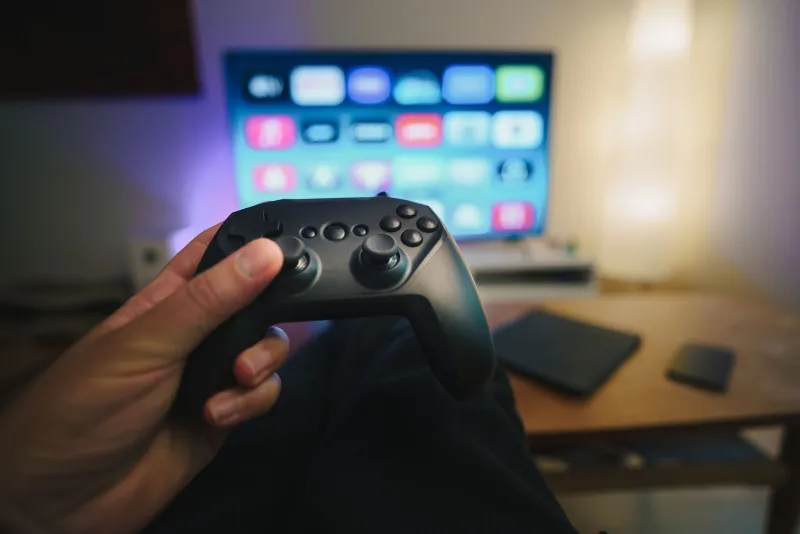
You open the app with no plan. You are not searching for a title. You are scrolling, thumb hovering, brain on standby. Then a tile catches your eye — or it doesn't. That tiny rectangle is doing more work than the entire marketing campaign that came before it. In 2026, the thumbnail is not the poster. It is the pilot.
British drama has a particular problem here. We make plenty of it, we argue about it constantly, and yet so much of it arrives on streaming menus looking like a placeholder. A moody landscape. Two faces staring into the middle distance. A skyline with a body-shaped shadow. If you need the synopsis to understand the image, the image has already failed. And viewers are not reading synopses. They are judging in half a second whether your show is worth the next two hours of their life.
The tile test
Think about how you actually choose something to watch on a Friday night. You are not comparing reviews. You are not cross-referencing Radio Times. You are flicking through rows of artwork, and your brain is making snap calls: crime, comedy, period, reality, something with Nicola Walker in it. That is the tile test. It happens before the trailer, before the cast interview, before the algorithm has even had a chance to nudge you towards episode two.
The best streaming artwork understands this. It gives you a face, a mood, a colour palette and a hint of genre without overexplaining. The worst artwork gives you a dark smear that could be a thriller, a documentary about damp, or a deleted scene from a Scandi noir. British dramas often fall into the second category, not because they are bad shows, but because the artwork is treated as an afterthought rather than the front door.
Why British drama gets the short straw
Some of this is budget. Some of it is workflow. Some of it is the very British belief that the work should speak for itself. But streaming menus are not polite dinner parties. They are crowded shop windows. If your show is sitting next to a glossy imported drama with five bespoke key art variants, a bright colour scheme and a lead actor's face filling a third of the screen, your subtle grey-toned ensemble piece is going to get scrolled past.
The auto-generated still problem makes it worse. Platforms love to pull a frame from the episode and call it a thumbnail. Sometimes that works. Often it doesn't. A quiet, emotionally precise moment in a British drama can become a muddy close-up of a kitchen table. A beautifully lit night scene becomes a black rectangle with a faint suggestion of a coat. A tense confrontation becomes two people with their eyes closed. The algorithm does not know what makes a good image. It knows what has been clicked before.
And British telly is often built on restraint. Our dramas love a slow burn, a loaded glance, a conversation in a car park. That is brilliant television. It is not always brilliant thumbnail material. The image that sells the show is not necessarily the image that represents it most faithfully. That tension is at the heart of the problem.
The spoiler in the still
There is also the strange habit of auto-stills giving away the shop. A character who dies in episode four pops up on the tile for episode one. A will-they-won't-they couple is shown mid-snog before you have even met them. A masked killer is clearly visible in the corner of a frame that should be teasing the mystery. Viewers are not stupid. They notice. And they remember.
The opposite happens too: artwork that is technically accurate but tonally misleading. A warm family comedy drama gets sold as a grim crime thriller because the only high-contrast still available is a scene in a hospital corridor. A period drama looks like a horror film. A show about grief looks like a show about stalking. In a menu where you have two seconds to make an impression, the wrong impression is worse than no impression at all.
The menu is the new channel
There was a time when a British drama could rely on a slot. Nine o'clock on BBC One meant something. ITV's Sunday night meant something. Now the slot is a row on a screen, and the row is shared with the entire world. Netflix UK, Prime Video, Disney+, NOW, BBC iPlayer, ITVX, Channel 4 — they are all fighting for the same thumb. Discoverability is not a marketing department problem anymore. It is a design problem.
And the design has to work at a glance. Not on a billboard. Not in a newspaper. On a phone, in a living room, next to a child asking for a snack. The tile is competing with everything. If it does not communicate quickly, it does not communicate at all. The algorithm does not watch the show. It watches the click. If the click does not come, the show sinks.
What good looks like
Good streaming artwork is not about dumbing down. It is about clarity. A strong face. A readable colour. A hint of place. A font that does not look like a legal document. The best British examples — and there are plenty — understand that a thumbnail is a promise, not a poster. It says: this is the tone. This is the world. This is why you should care.
That might mean shooting dedicated key art on set rather than hoping the unit photographer catches lightning. It might mean designing multiple variants for different audiences. It might mean letting the marketing team see the scripts before the final grade. None of that is glamorous. All of it matters. A show can be a masterpiece and still lose to a better rectangle.
The half-second contract
Viewers owe British drama nothing. That is the hard truth of the streaming age. There is too much to watch, too little time, and too many other tiles asking for the same attention. The first episode is not the opening scene. It is the image that makes someone stop scrolling. If that image is a blurry still of a character we have not met yet, we have already lost.
So next time a British drama disappears into the menu without a trace, do not just blame the algorithm. Look at the tile. That is where the story started. And that is where, for a lot of viewers, it ended.